It’s so much fun to see how each one turns out – every egg is truly one-of-a-kind.
Give it a try this year and enjoy getting crafty with your Easter celebrations!
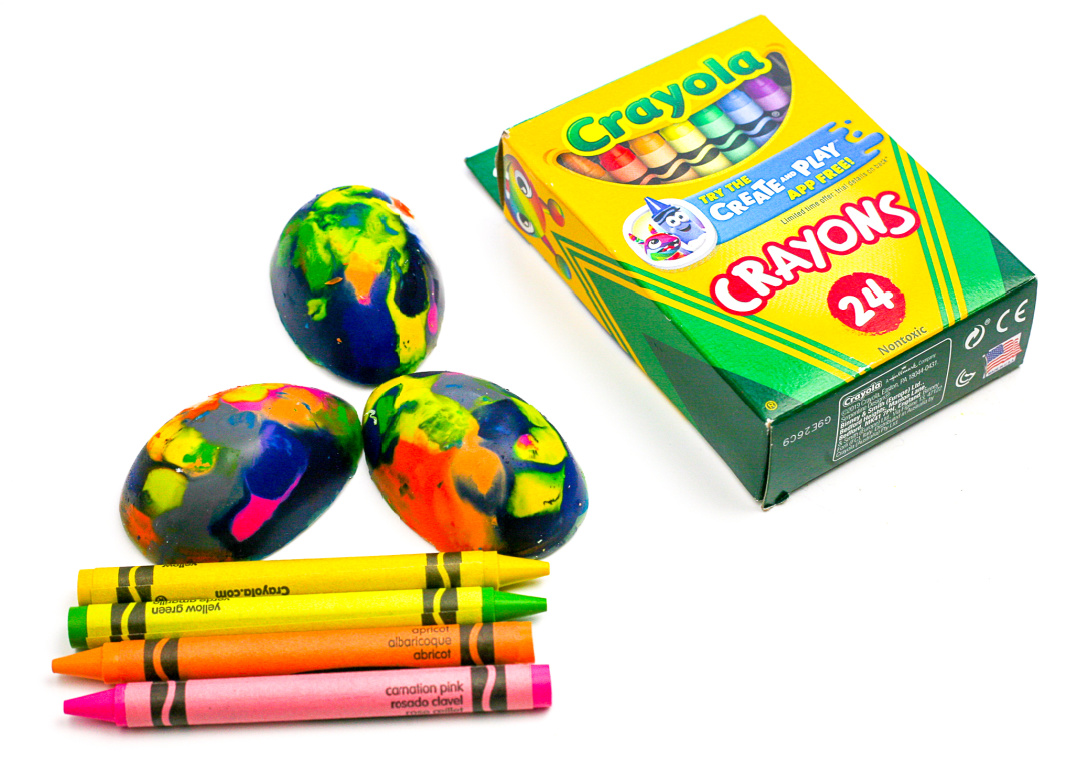
Melted Crayon Easter Eggs
Supplies:
cookie sheet
Crayons (broken up)
egg shaped silicone mold
oven
freezer
Directions:
Preheat oven to 275 degrees.
If using new crayons, place them in a bowl or cup of hot water for 5 minutes to easily remove the wrapper.
Crayons will cut easily with scissors if cut right after removing them from the warm water. Cut the Crayons down into smaller pieces.
Place small pieces of crayon in the mold.
If using a mold, place the mold on top of a cookie sheet.
Place the cookie sheet in the oven for 10-12 minutes until the Crayons melt down.
Remove cookie sheet from oven with oven mitts and let cool for 5 minutes.
For faster cooling, place the cooled down mold into the freezer for 2-4 hours.
After freezing allow the mold to warm to room temperature before removing.
Melted Crayon Easter Eggs
Materials
Cookie sheet
Crayons (broken up)
Muffin tin or other type of mold
Oven
Freezer
Instructions
Preheat oven to 275 degrees.
If using new crayons, place them in a bowl or cup of hot water for 5 minutes to easily remove the wrapper.
Crayons will cut easily with scissors if cut right after removing them from the warm water.
Place small pieces of crayon in the mold. If using a mold, place the mold on top of a cookie sheet.
Place the cookie sheet in the oven for 10-12 minutes.
Remove cookie sheet from oven with oven mitts and let cool for 5 minutes.
For faster cooling, place the cooled down mold into the freezer for 2-4 hours. After freezing allow the mold to warm to room temperature before removing.
When you’re done creating your Easter egg masterpiece, let it dry before displaying proudly for all to appreciate.
Enjoy this new take on Easter tradition; happy creating!
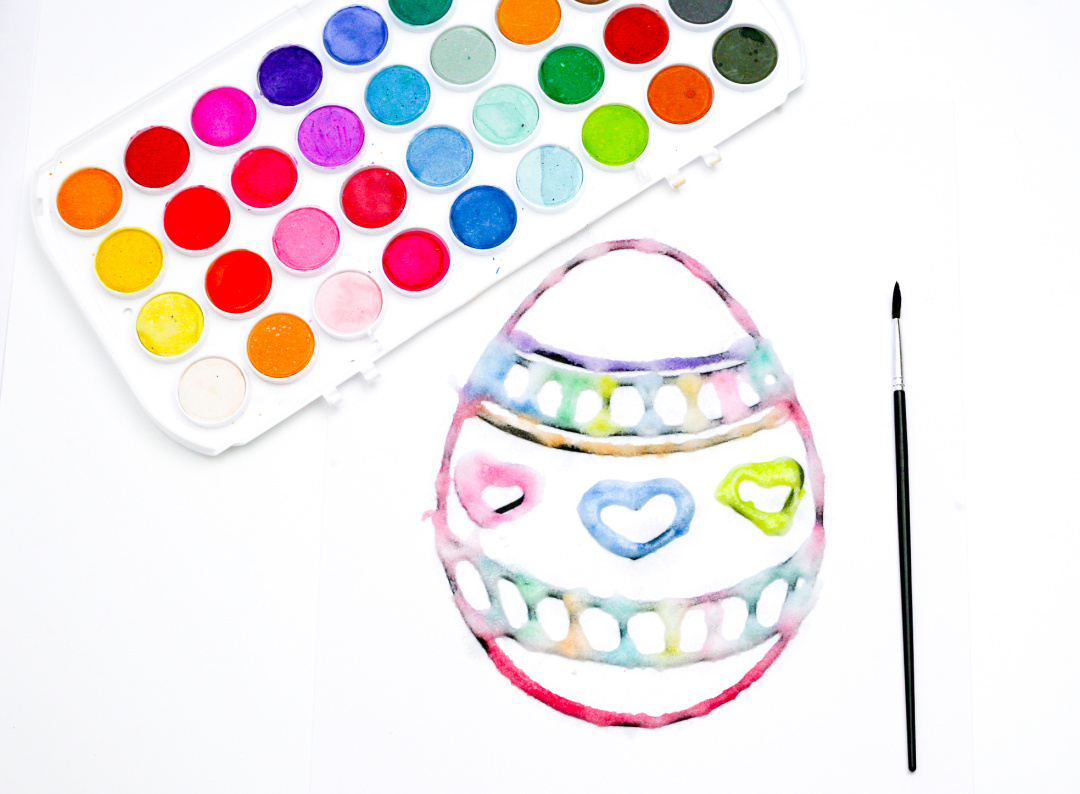
Salt Painted Easter Eggs
Supplies:
watercolor paint palette
water
paintbrush
white glue
salt
printable egg coloring page (see below) (recommended: print on white cardstock)
Directions:
Trace around the image on the coloring page with glue.
Sprinkle glue with salt as you would with glitter. Tape the paper to settle the salt into any grooves. Gently lift the paper and shake to remove the excess salt.
Dip paintbrush in water and blend with watercolor to soften. Saturate the paintbrush with watercolor. Then, gently touch the paintbrush to the salt. The color will spread.
Salt Painted Easter Eggs
Materials
Simple coloring page printed on white thick cardstock (recommended)
Watercolor paint palette
Water
Paintbrush
White glue
Salt
Instructions
Trace around the image on the coloring page with glue.
Sprinkle glue with salt as you would with glitter.
Tape the paper to settle the salt into any grooves.
Gently lift the paper and shake to remove the excess salt. Dip paintbrush in water and blend with watercolor to soften.
Saturate the paintbrush with watercolor. Then, gently touch the paintbrush to the salt. The color will spread.
Allow the picture to dry completely before displaying or gifting.
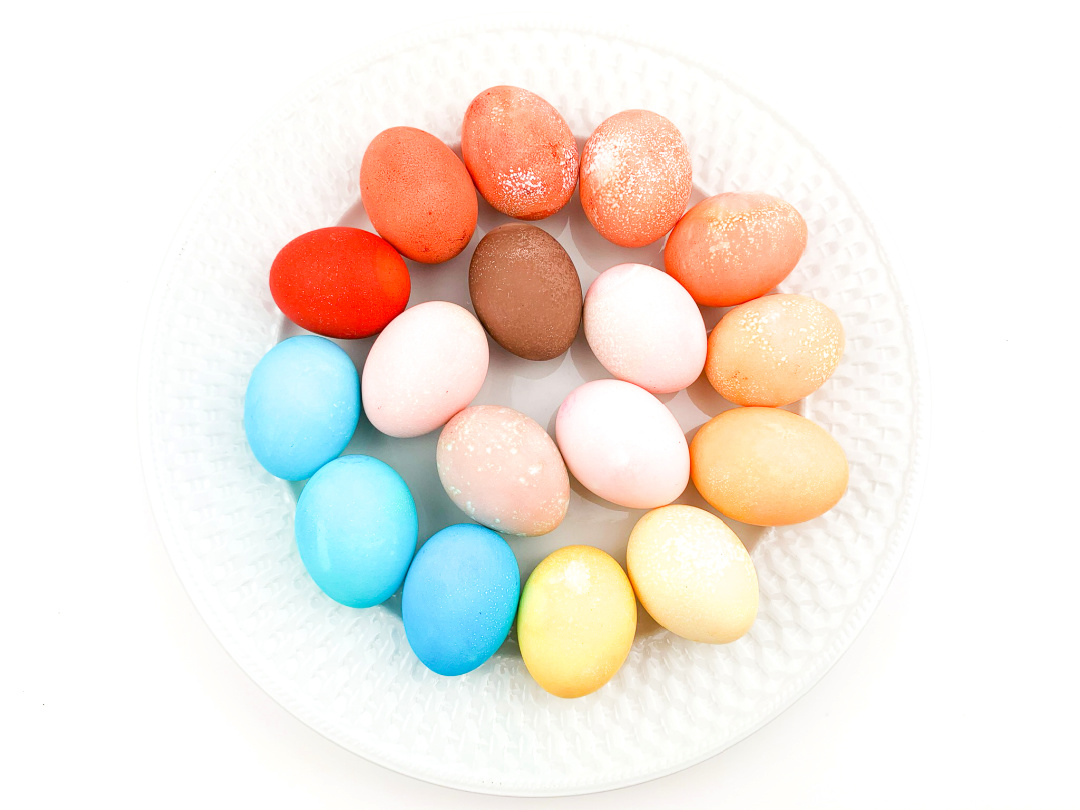
Today I’m adding a new way to dye eggs to the list – dyeing eggs with Kool-Aid!
Dyeing eggs using the Kool-Aid method is a fun option for kids and provides an alternative way to dye eggs other than just using the vinegar method. No vinegar is needed in this recipe!
Plus, It smells great in the room when preparing the containers with the Kool-Aid mix!
How to Dye Eggs with Kool-Aid
Supplies:
Kool-Aid Packets
Small Containers
Water
Paper towel lined tray
Spoon
Directions:
Pour water into each container and fill about ¾ full.
Add a full packet of Kool-Aid mix to each container of water.
Stir well with the spoon. Try not to mix the darker colors with the lighter colors when stirring other colors (use a paper towel to wipe off the spoon between mixing!)
Place an egg into each cup of Kool-Aid mix. (Note: Some eggs may float towards the surface. Just move them around during the dyeing process with a spoon to get an even color.)
If you want your eggs to be lighter and not as speckled, leave the egg in for about a minute or less, checking the egg until desired color is achieved.
Place the egg on the paper towel lined tray. Move the egg around occasionally to avoid the paper towel leaving a print on the egg on one side.
Important note: For a speckled look, leave the egg in longer. When you take the egg out, you may notice a film around the egg. This is ok! Gently place the egg onto the paper towel and allow the egg to dry. Do not rub the egg, or the film will smear! If this happens, wash the egg off (the film will wash off) and re-dye the egg. Place the egg onto the paper towel carefully. Once dried, the egg will have a nice speckled look that does not smear.
How to Dye Eggs with Kool-Aid
Instructions
Pour water into each container and fill about ¾ full.
Add a full packet of Kool-Aid mix to each container of water. Stir well with the spoon. Try not to mix the darker colors with the lighter colors when stirring other colors (use a paper towel to wipe off the spoon between mixing!)
Place an egg into each cup of Kool-Aid mix. (Note: some eggs may float towards the surface. Just move them around during the dyeing process with a spoon to get an even color.)
If you want your eggs to be lighter and not as speckled, leave the egg in for about a minute or less, checking the egg until desired color is achieved.
Place the egg on the paper towel lined tray. Move the egg around occasionally to avoid the paper towel leaving a print on the egg on one side.
Important note: For a speckled look, leave the egg in longer. When you take the egg out, you may notice a film around the egg. This is ok! Gently place the egg onto the paper towel and allow the egg to dry. Do not rub the egg, or the film will smear! If this happens, wash the egg off (the film will wash off) and re-dye the egg. Place the egg onto the paper towel carefully. Once dried, the egg will have a nice speckled look that does not smear.
Today, I’m sharing how to dye eggs with shaving cream! This method is similar to the whipped cream method of dyeing eggs listed above. The only thing different is one cream is edible and the other is not!
As always, I do recommend adult supervision when using ingredients like shaving cream. Pay close attention especially with the little ones when completing this activity!
You don’t need a lot of shaving cream in each muffin cup. In fact, I recommend using just a small squirt, since the shaving cream will rise.
Also, it’s important to note that I do not recommend using water at all for this method. I learned this the hard way once when I tried to wash the shaving cream off of the eggs. The dye came off completely!
Read my tips below on how you can create vibrant, beautiful eggs with shaving cream!
How to Dye Eggs with Shaving Cream
Supplies:
boiled eggs
food coloring
muffin pan
shaving cream (foam, not shaving gel)
paper towel lined trays
straws or toothpicks
plastic spoon
tissue (like Kleenex)
plastic gloves (optional)
Directions:
Squirt a small amount of shaving cream in each muffin cup.
Use the spoon to spread the shaving cream out evenly in each cup.
Using desired colors, add a 1-3 drops of food coloring into each muffin cup.
Use the straws or toothpicks to mix the colors around in the shaving cream. Try not to mix the colors if you are wanting to create single colored eggs. (I’ll be sharing how to mix colors at the end of this post!)
Place an egg in each muffin cup. Put on gloves if you’d like (I do recommend this if you don’t want your hands to turn colors from the food coloring!)
Roll each egg around into the colored shaving cream until the egg has been colored. You can help color the egg by rubbing some of the coloring around onto the shell.
Once each egg is colored, place each egg onto a paper towel lined tray. Space the eggs apart so they do not touch. Set aside for about 30 minutes or longer.
If you have more boiled eggs to use you can squirt more shaving cream into each muffin cup. Now it’s time to try mixing colors!
Add a different color in each muffin cup.
Place an egg in each muffin cup and turn the egg around in the muffin cup until the egg is covered.
Complete the same steps above and now you have pretty multi-colored shaving cream eggs!
Take a tissue and place it around each egg. Gently dab the tissue up against the egg, trying to remove the shaving cream from the egg. You may need to use two tissues for this process until all shaving cream is removed. Try not to rub the egg or the coloring may smear, and as mentioned earlier, do not use water or the coloring could wash off!
How to Dye Eggs with Shaving Cream
Materials
boiled eggs
food coloring
muffin pan
shaving cream (foam, not shaving gel)
paper towel lined trays
straws or toothpicks
plastic spoon
tissue (like Kleenex)
plastic gloves (optional)
Instructions
Squirt a small amount of shaving cream in each muffin cup. Use the spoon to spread the shaving cream out evenly in each cup.
Using desired colors, add a 1-3 drops of food coloring into each muffin cup. Use the straws or toothpicks to mix the colors around in the shaving cream. Try not to mix the colors if you are wanting to create single colored eggs. (I’ll be sharing how to mix colors at the end of this post!)
Place an egg in each muffin cup. Put on gloves if you’d like (I do recommend this if you don’t want your hands to turn colors from the food coloring!) Roll each egg around into the colored shaving cream until the egg has been colored. You can help color the egg by rubbing some of the coloring around onto the shell.
Once each egg is colored, place each egg onto a paper towel lined tray. Space the eggs apart so they do not touch. Set aside for about 30 minutes or longer.
Take a tissue and place it around each egg. Gently dab the tissue up against the egg, trying to remove the shaving cream from the egg. You may need to use two tissues for this process until all shaving cream is removed. Try not to rub the egg or the coloring may smear, and as mentioned earlier, do not use water or the coloring could wash off!
Now you have vibrant, shaving cream colored eggs!
If you have more boiled eggs to use you can squirt more shaving cream into each muffin cup.
Now it’s time to try mixing colors!
Add a different color in each muffin cup. Place an egg in each muffin cup and turn the egg around in the muffin cup until the egg is covered.
Complete the same steps above and now you have pretty multi-colored shaving cream eggs!
During the month leading up to Easter, we dye a lot of Easter eggs. I’ve heard of dyeing Easter eggs with shaving cream, but I wanted to try something a little bit safer and try dyeing eggs in whipped cream!
I think dyeing eggs with whipped cream provides more of a “hands-on” experience than just dipping them in water/vinegar/food coloring and then taking them out.
Dyeing Easter eggs with whipped cream does allow the colors to mix a little more for a cool effect on each egg!
How to Dye Easter Eggs with Whipped Cream
Supplies:
1 tub of whipped cream
large muffin pan
plastic spoon
toothpicks
food coloring
boiled eggs
bowl of white vinegar
Directions:
Hard-boil the eggs by covering them with cool water by about 1 inch. Bring water to a boil over medium heat. Cover and remove from heat. Let sit 12 minutes.
Fill the cups of a muffin pan with whipped cream.
Add about 6-8 different drops of food coloring into each cup.
Using a toothpick or spoon to swirl the colors slightly in each cup. Be sure to wipe off the spoon or use new toothpicks for the other colors so that you don’t mix them!
Dip each egg in a bowl of vinegar for a few seconds.
6. Place the egg into a muffin cup. Allow the eggs to sit in the color for about a minute or two.
**NOTE: Do not leave the eggs in the vinegar too long! The first time I tried dyeing the eggs, I had a major fail. I accidentally left the eggs in the vinegar too long. BIG mistake. That’s why it’s important to only dip the eggs for a few seconds. I did this a second time and finally got it right!
Slightly turn the egg over to color the other side. Wipe off your fingers when turning the eggs in the other cups to avoid mixing the colors.
Take each egg out of the cup and rinse the egg off. Pat dry.
If the color isn’t as bold as you’d like, re-dip egg into the vinegar and place back into the colors and roll the egg around until you get it as bold as you’d like. You can even add a few drops of food coloring if you’d like to get the colors just right! I re-dipped only a few of the eggs to get a better color on them.
Here’s how our eggs turned out. We placed them in a pretty basket! My girls are going to hide them for fun and find them!
This is just one of the many ways that you can dye Easter eggs this holiday season!
How to Dye Easter Eggs with Whipped Cream
Materials
1 tub of whipped cream
large muffin pan
spoon or toothpicks
food coloring
boiled eggs
bowl of vinegar
Instructions
1. Hard-boil the eggs by covering them with cool water by about 1 inch. Bring water to a boil over medium heat. Cover and remove from heat. Let sit 12 minutes.
2. Fill the cups of a muffin pan with whipped cream.
3. Add about 6-8 different drops of food coloring into each cup.
4. Using a toothpick or spoon to swirl the colors slightly in each cup. Be sure to wipe off the spoon or use new toothpicks for the other colors so that you don’t mix them!
5. Dip each egg in a bowl of vinegar for a few seconds.
6. Place the egg into a muffin cup. Allow the eggs to sit in the color for about a minute or two.
**NOTE: Do not leave the eggs in the vinegar too long! The first time I tried dyeing the eggs, I had a major fail. I accidentally left the eggs in the vinegar too long. BIG mistake. That’s why it’s important to only dip the eggs for a few seconds. I did this a second time and finally got it right!
7. Slightly turn the egg over to color the other side. Wipe off your fingers when turning the eggs in the other cups to avoid mixing the colors.
8. Take each egg out of the cup and rinse the egg off. Pat dry. If the color isn’t as bold as you’d like, re-dip egg into the vinegar and place back into the colors and roll the egg around until you get it as bold as you’d like. You can even add a few drops of food coloring if you’d like to get the colors just right! I re-dipped only a few of the eggs to get a better color on them.
Toilet paper roll crafts are easy and fun to make. Today, I’m sharing my tutorial on how to make a chicken out of a toilet paper roll!
This chick is adorable and perfect to display in your home or classroom this year.
I hope you enjoy this craft! At the end of the post, I share more chicken activities that you can use as a supplement to your chicken or farm animal unit.
Chicken Toilet Paper Roll Craft
Supplies:
Empty Toilet Paper Roll
Construction Paper or Foam Paper
Paint Pens or Markers
Googly Eyes
Craft Feathers
Hot Glue Gun and Hot Glue Sticks
Directions:
Cut foam or construction paper to size and glue around entire roll.
Glue on googly eyes.
Cut a small paper triangle for the nose and attach just below the eyes.
Use paint pens or markers to decorate the roll as desired.
Arrange & attach the craft feathers at the head (glue inside roll) and tail (glue from behind roll) with hot glue.
Your feathered friend is complete!
Chicken Toilet Paper Roll Craft
Materials
Empty Toilet Paper Roll
Foam or Construction Paper
Paint Pens or Markers
Craft Eyes
Craft Feathers
Hot Glue Gun and Hot Glue Sticks
Instructions
Cut foam or construction paper to size and glue around entire roll. Glue on craft eyes. Cut a small paper triangle for the nose and attach just below the eyes. Use paint pens or markers to decorate the roll as desired. Arrange & attach the craft feathers at the head (glue inside roll) and tail (glue from behind roll) with hot glue. Your feathered friend is complete!
Are you looking for simple Easter crafts to do with the kids? Celebrate Easter this year with this easy to make EasterBunny Toilet Paper Roll Craft for kids.
Easter is around the corner! Before you know it, the Easter bunny will be hopping around the neighborhood leaving treats for the boys and girls!
This Easter, have your child create this easy Easter Bunny Toilet Paper Roll Craft! Toilet paper roll crafts are fun to make.
Just save your empty toilet paper rolls, add them to a storage container and get crafty all year long!
We hope you enjoy creating this craft below this year. Display this adorable Easter bunny in your home or classroom!
Easter Bunny Toilet Paper Roll Craft
Supplies:
Empty Toilet Paper Roll
Construction Paper or Foam Paper
Googly Eyes
Paint Pen or Marker
Craft Pom Pom
Hot Glue Gun and Hot Glue Sticks
Directions:
Cut paper to size and glue onto roll, covering completely.
Glue on the craft eyes.
Use paint pen or marker to draw a nose, mouth, and teeth.
Cut ear shapes from the paper, adding details with the paint pen or marker.
Glue ears to the top of the roll, just above the eyes.
Cut bowtie shape from paper, adding detail with paint pen or marker.
Attach bowtie with glue.
Glue on the pom pom tail to one side of the roll.
Your Easter Bunny is complete!
Easter Bunny Toilet Paper Roll Craft
Materials
Empty Toilet Paper Roll
Construction or Foam Paper
Googly Eyes
Paint Pen or Marker
Craft Pom Pom
Hot Glue and Hot Glue Sticks
Instructions
Cut paper to size and glue onto roll, covering completely.
Glue on the craft eyes.
Use paint pen or marker to draw a nose, mouth, and teeth.
Cut ear shapes from the paper, adding details with the paint pen or marker.
Glue ears to the top of the roll, just above the eyes.
Cut bowtie shape from paper, adding detail with paint pen or marker.
Attach bowtie with glue.
Glue on the pom pom tail to one side of the roll.
Your Easter Bunny is complete!
This website uses cookies to improve your experience. We'll assume you're ok with this, but you can opt-out if you wish.AcceptRejectRead More
Privacy & Cookies Policy
Privacy Overview
This website uses cookies to improve your experience while you navigate through the website. Out of these, the cookies that are categorized as necessary are stored on your browser as they are essential for the working of basic functionalities of the website. We also use third-party cookies that help us analyze and understand how you use this website. These cookies will be stored in your browser only with your consent. You also have the option to opt-out of these cookies. But opting out of some of these cookies may affect your browsing experience.
Necessary cookies are absolutely essential for the website to function properly. This category only includes cookies that ensures basic functionalities and security features of the website. These cookies do not store any personal information.
Any cookies that may not be particularly necessary for the website to function and is used specifically to collect user personal data via analytics, ads, other embedded contents are termed as non-necessary cookies. It is mandatory to procure user consent prior to running these cookies on your website.