
This shaving cream rain cloud experiment is a simple and colorful way to introduce kids to weather science through a hands-on activity.
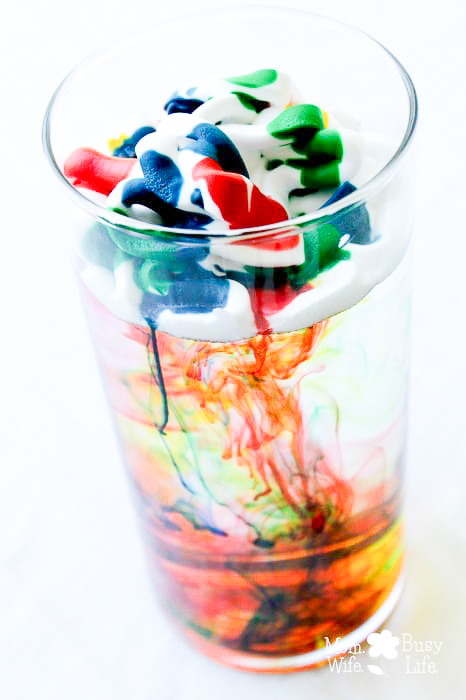
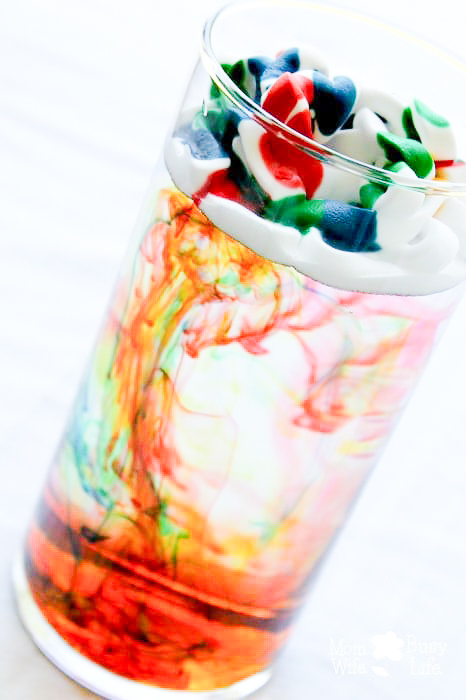
Using water, shaving cream, and food coloring, kids can watch colorful “rain” slowly move through a fluffy shaving cream cloud and fall into the water below.
This activity works well for a weather unit, spring science lesson, homeschool activity, classroom demonstration, or an easy science experiment at home.
Kids can observe the changes as they happen, ask questions, make predictions, and learn more about the science behind rainy weather. Best of all, you only need a few basic supplies to get started.
Why You’ll Love This Shaving Cream Rain Experiment
This simple weather experiment is a fun way to combine hands-on learning with an activity kids will enjoy watching from start to finish.
- Easy to set up: You only need a few basic supplies, including water, shaving cream, and food coloring.
- Introduces weather science: Kids can begin learning about clouds, rain, and precipitation through a simple visual model.
- Encourages observation: Watch closely as the colorful “rain” slowly makes its way through the shaving cream cloud and into the water.
- Gets kids thinking: Encourage kids to make predictions about when the rain will begin and what will happen as more colored water is added.
- Easy to repeat: Try the experiment again using different colors, containers, or amounts of shaving cream and compare the results.
- Works in different learning settings: Use it at home, in the classroom, during a homeschool weather unit, or as a simple preschool or elementary science activity.
One of my favorite things about this experiment is that kids get an immediate visual result while still having plenty of opportunities to ask questions and explore what is happening.
What Kids Learn From This Rain Cloud Experiment
The shaving cream rain cloud experiment is more than a colorful activity to watch. It gives kids an opportunity to explore basic weather concepts while practicing important science skills like observing, predicting, and asking questions.
Here are some of the concepts and skills kids can explore during the experiment:
- Clouds and precipitation: Introduce kids to the idea that clouds contain tiny water droplets or ice crystals and that precipitation falls from clouds when droplets or crystals grow large enough.
- Weather vocabulary: Talk about words such as cloud, rain, precipitation, water droplets, and weather as you complete the activity.
- Making predictions: Before adding the colored water, ask kids what they think will happen and how long they think it will take before they see “rain.”
- Cause and effect: Kids can observe how adding more colored water to the shaving cream eventually changes what they see below the cloud.
- Observation skills: Encourage kids to watch closely for the first streaks of color and describe how the water changes throughout the experiment.
- Comparing results: Repeat the experiment with different amounts of shaving cream, different containers, or different rates of adding colored water and compare what happens.
- Fine motor skills: Younger children can practice hand-eye coordination and fine motor control when using a dropper or pipette to carefully add colored water.
Is This How Real Clouds Make Rain?
The shaving cream in this experiment is a model that helps kids visualize the idea of rain falling from a cloud, but real clouds aren’t made of shaving cream and don’t simply fill up with water.
Real clouds are made of tiny water droplets and ice crystals. As droplets or ice crystals within a cloud grow, they can eventually become large and heavy enough to fall as precipitation.
For younger kids, you can keep the explanation simple: the shaving cream represents our cloud, and the colored water helps us see our pretend rain falling from it.
Older children can use the activity as a starting point for learning more about clouds, precipitation, and the water cycle.
Save this Shaving Cream Rain Cloud Science Experiment for later:
Supplies for the Shaving Cream Rain Experiment
Affiliate Disclosure: As an Amazon Associate, I earn from qualifying purchases. I may earn a small commission if you make a purchase through these links, at no additional cost to you.
You only need a few simple supplies to create your shaving cream rain cloud. You may already have most of these items at home.
- Clear glass, jar, vase, or pitcher: Choose a clear container so kids can easily watch the colorful rain fall through the water.
- Water: Regular tap water works perfectly for this experiment.
- Shaving cream: Use regular foaming shaving cream rather than shaving gel. This will create the fluffy cloud on top of the water.
- Food coloring: Use one color to create a traditional rain effect or several colors to make it easier to watch the different streams move through the cloud.
- Dropper or pipette: A dropper gives kids more control over how quickly they add the colored water and adds extra fine motor practice.
A Quick Tip Before You Start
Food coloring can stain clothing, countertops, and other surfaces. Consider placing your container on a tray or protected surface, especially if younger children will be adding the colors themselves.
Adult supervision is recommended, and remind children that even though the finished experiment may look colorful and interesting, it is not safe to drink.
How to Make Shaving Cream Rain
Once you have your supplies ready, it only takes a few minutes to set up your shaving cream rain cloud experiment.
Step 1: Fill Your Container With Water
Fill a clear glass, jar, vase, or pitcher about three-quarters full with water. Leave enough room at the top for the shaving cream.
Step 2: Create the Shaving Cream Cloud
Shake the can of shaving cream well. Spray a fluffy layer of shaving cream over the surface of the water until the top is covered.
The shaving cream will represent the cloud during the experiment.
Step 3: Add the Food Coloring
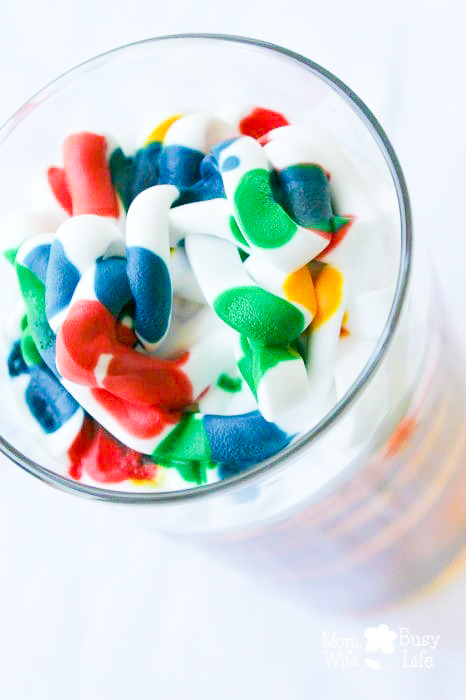
Carefully add drops of food coloring to the top of the shaving cream. You can use a single color or several different colors.
For more control, mix a few drops of food coloring with a small amount of water and use a dropper or pipette to add the colored water to the shaving cream.
Step 4: Watch for the Rain
Now comes the fun part!
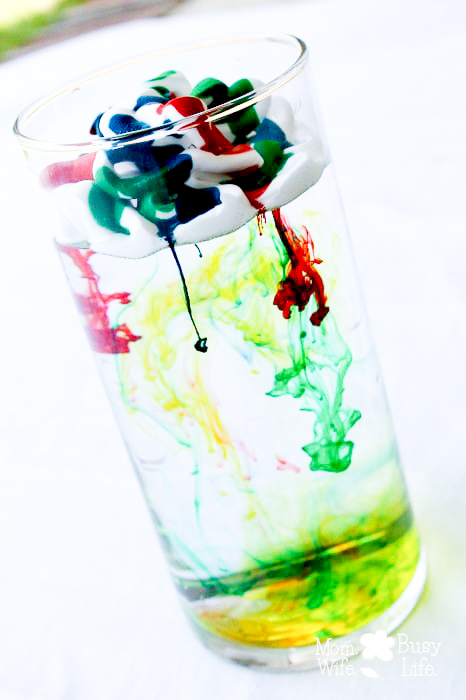
Watch closely as the colored water slowly travels through the shaving cream. After a little while, streaks of color should begin appearing underneath the cloud and falling into the clear water.
Encourage kids to watch for the very first drop that makes it through.
Step 5: Add More and Observe
Continue adding small amounts of colored water and watch what happens. Kids can observe how the streams of “rain” change as more liquid is added.
Try adding the drops to different areas of the shaving cream and compare what happens.
Don’t rush to add too much at once. Part of the fun is watching and waiting to see when the rain will begin!
What Should Kids Look For?
Encourage kids to slow down and watch what happens throughout the experiment. Some of the most interesting changes happen before the colorful “rain” becomes easy to see in the water.
Ask kids to look for:
- The first sign of rain: How long does it take before the first bit of color appears underneath the shaving cream?
- Changes inside the cloud: Can they see any color moving through the shaving cream before it reaches the water?
- Different streams of color: Do all of the colors travel through the cloud at the same time or does one appear first?
- Changes in the water: Watch how the clear water changes as more colorful rain falls into it.
- What happens with more drops: Does adding more colored water make the rain appear faster or create larger streams?
Before adding more drops, give kids a chance to predict what they think will happen next. You can also have them describe what they see using words, drawings, or a simple science journal.
There isn’t just one moment to watch during this experiment. Observing the changes from the first drop of food coloring until the water becomes filled with color is part of the learning experience.
How Does the Shaving Cream Rain Experiment Work?
In this experiment, the shaving cream acts as a simple model of a cloud, while the colored water represents rain. As you add drops to the top, the liquid slowly works its way through the shaving cream until you can see colorful streams falling into the water below.
This gives kids a visual way to talk about rain and precipitation, but it’s important to remember that the experiment is a model. Real clouds don’t work exactly like a layer of shaving cream sitting on top of water.
How Does Rain Form in Real Clouds?
Clouds are made up of tiny water droplets and ice crystals. These tiny particles can collide and combine inside a cloud, becoming larger over time. When they become large and heavy enough to fall through the atmosphere, we get precipitation.
Depending on the conditions in the atmosphere, that precipitation can reach the ground as rain, snow, sleet, or hail.
For younger children, you don’t need to go into all of those details. You can simply explain that our shaving cream is pretending to be a cloud, and the colored water lets us watch pretend rain fall from it.
For older kids, use the experiment as a starting point to talk more about clouds, precipitation, weather, and the water cycle.
Questions to Ask Kids During the Experiment
You don’t need a complicated lesson plan to encourage scientific thinking. A few simple questions before, during, and after the shaving cream rain experiment can help kids make predictions, describe what they observe, and think about why changes are happening.
Before the Experiment
- What do you think will happen when we put the colored water on top of the shaving cream?
- Do you think the color will go through the cloud right away?
- Which color do you think we’ll see in the water first?
- How many drops do you think we’ll need before it starts to “rain”?
While You Watch
- What do you notice happening to the food coloring?
- Can you see the color moving through the shaving cream?
- What changed after we added more drops?
- Are all of the colors moving at the same speed?
- What do you think will happen if we keep adding more?
After the Experiment
- Was your prediction correct?
- What surprised you?
- What happened to the clear water?
- What would you change if we tried the experiment again?
- What could we test next time?
There aren’t necessarily right or wrong answers to every question. Encourage kids to describe what they notice and explain their thinking. That’s an important part of learning how to observe, predict, test ideas, and talk about results.
Try These Shaving Cream Rain Experiment Variations
Once you’ve tried the basic shaving cream rain cloud experiment, repeat it while changing one part of the setup. This is a simple way to introduce kids to the idea of testing different variables and comparing results.
Try a Different Size Container
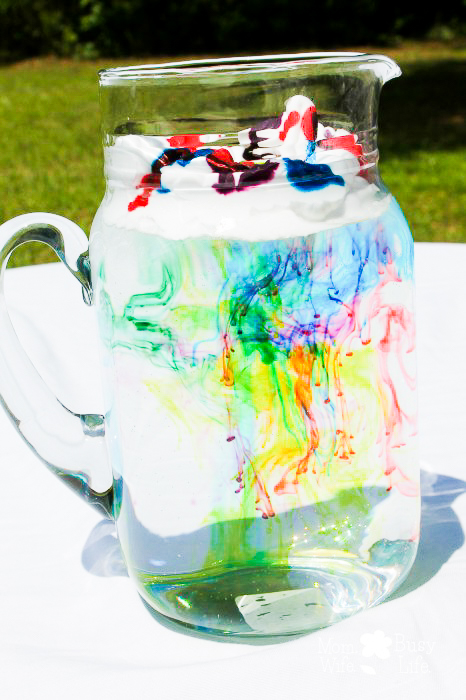
When I originally did this experiment with my girls, we tried it in both a smaller container and a large clear pitcher. The pitcher worked well and gave us a larger area to watch the colorful rain fall through the water.
Try the experiment in containers of different sizes and ask kids if they notice any differences.
Use One Color
Instead of several colors, try using only blue food coloring. This creates a simple rain effect and makes it easy for kids to follow the colored water as it moves through the shaving cream.
Compare Different Color Sets
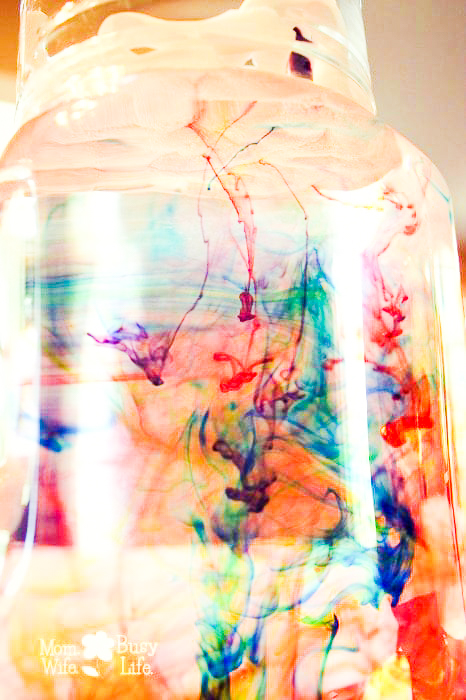
We also experimented with both primary and neon food coloring when we originally tried this activity.
Let kids choose different colors for each experiment and compare the results. Lighter and darker colors may also be easier or harder to see as they move through the water.
Change the Amount of Shaving Cream
Try creating a thinner cloud during one experiment and a thicker shaving cream cloud during another.
Before adding the colored water, ask kids which cloud they predict the liquid will travel through first. Then test their prediction.
Add the Drops at Different Speeds
During one experiment, add the colored water slowly, one drop at a time. During another, add several drops more quickly.
Does the rain begin at the same time? Do the streams of color look different?
Change One Thing at a Time
If you’re using this activity as a science lesson with older kids, encourage them to change one variable at a time while keeping everything else as similar as possible.
They can make a prediction, test it, observe what happens, and compare the results with the first experiment.
Younger children don’t need to worry about formal scientific vocabulary. Simply asking, “What should we change this time?” is a fun way to encourage curiosity and experimentation.
Tips for the Best Shaving Cream Rain Results
This experiment is easy to set up, but a few simple tips can help you get a better view of the colorful rain as it moves through the shaving cream.
- Use a clear container. A glass, jar, vase, or clear pitcher makes it easier for kids to watch what is happening from the sides.
- Choose regular shaving cream. Use a traditional foaming shaving cream rather than shaving gel so you can create a fluffy cloud on top of the water.
- Don’t overfill the container. Filling it about three-quarters full leaves enough room for the shaving cream without making a mess.
- Start with a manageable cloud. You don’t need an enormous amount of shaving cream. If the layer is very thick, it may take longer for the colored water to travel through it.
- Add the color gradually. Start with a few drops and give kids time to observe before adding more.
- Use a dropper for more control. Mixing food coloring with a little water and adding it with a pipette or dropper makes it easier for kids to control where and how quickly they add the liquid.
- Protect your work surface. Food coloring can stain, so place the container on a tray, plate, or protected surface.
- Give it time. The color may not immediately appear underneath the shaving cream. Waiting for that first streak of “rain” is part of the experiment!
- Keep it safe. Supervise young children and remind them that the shaving cream rain mixture is for experimenting only and should not be tasted or consumed.
If your rain doesn’t appear immediately, don’t assume the experiment didn’t work. Wait a little longer and then add a small amount of additional colored water if needed.
Ways to Use This Weather Science Activity
The shaving cream rain cloud experiment is easy enough to do at home but can also be incorporated into a variety of learning activities for preschool and elementary-age kids.
Weather Unit
Add this experiment to a weather unit when kids are learning about clouds, rain, precipitation, and different types of weather. After the experiment, encourage kids to look outside and describe the clouds and weather they see.
Preschool and Kindergarten Science
Young children don’t need a detailed explanation of cloud formation to benefit from the activity. Focus on making predictions, observing changes, learning simple weather vocabulary, and describing what they see.
Elementary Science
With older children, use the experiment as a starting point for a deeper discussion about clouds, precipitation, the atmosphere, and the water cycle. Kids can also repeat the experiment while changing one variable and recording the results.
Homeschool Weather Lesson
This is an easy hands-on activity to add to a homeschool weather or water cycle lesson. Pair the experiment with weather books, a science journal, or daily weather observations.
Classroom Demonstration
Create one large shaving cream rain cloud in a clear pitcher or container for the class to observe together. Before adding the colored water, have students make predictions about what they think will happen.
Rainy Day Science Activity
If rainy weather has everyone stuck indoors, use the real weather outside as inspiration for a simple science activity. Kids can create their own rain cloud and then compare the experiment with what they observe outdoors.
However you use it, encourage kids to predict, observe, and ask questions instead of focusing only on the colorful final result. Those simple conversations can turn an easy activity into a meaningful introduction to scientific thinking.
Shaving Cream Rain Experiment FAQs
What age is the shaving cream rain experiment for?
This experiment works especially well with preschool, kindergarten, and elementary-age children. Younger kids can focus on colors, weather vocabulary, predictions, and observations, while older kids can explore precipitation, cloud formation, variables, and the water cycle in more detail.
Adult supervision is recommended, especially when younger children are handling shaving cream and food coloring.
Why isn’t the food coloring going through the shaving cream?
Give it a little time! If your shaving cream layer is especially thick, the colored water may take longer to travel through it.
If you still don’t see any “rain,” gradually add a little more colored water and continue observing. You can also try a thinner shaving cream cloud the next time and compare the results.
Can I use shaving gel instead of shaving cream?
Regular foaming shaving cream is the better choice for this activity because it creates the fluffy layer needed for the cloud. Shaving gels have a different consistency and may not give you the same results.
Do I have to use several colors?
No. Blue food coloring works well if you want the experiment to look more like rain. Using several colors simply makes the streams easier and more exciting to observe as they move through the shaving cream and water.
Can I do the experiment in a jar?
Yes! A clear jar, drinking glass, vase, pitcher, or similar transparent container can work. The most important thing is being able to clearly see through the sides.
I’ve also done this experiment in a large clear pitcher, which gave us plenty of space to watch the colorful rain falling through the water.
How long does the shaving cream rain experiment take?
Setting everything up only takes a few minutes. How quickly the colored water begins moving through the shaving cream can vary depending on how thick your shaving cream cloud is and how much liquid you add.
Instead of rushing it, encourage kids to watch closely and predict when they think the first “rain” will appear.
Does this experiment show exactly how rain forms?
No. This activity uses shaving cream as a visual model of a cloud so kids can observe colored water falling from it like rain.
Real clouds are made of tiny water droplets and ice crystals, and the process that produces precipitation is more complex. Use this activity as an introduction to weather science rather than an exact recreation of cloud formation.
Can we do the shaving cream rain experiment more than once?
Absolutely. Repeating it is a great way to extend the learning. Try changing the amount of shaving cream, container size, colors, or speed at which the colored water is added.
Ask kids to make a prediction before each new experiment and compare the results afterward.
More Easy Science Activities for Kids
If your kids enjoyed making shaving cream rain, keep the hands-on learning going with another simple activity! These colorful experiments and activities are easy ways to encourage kids to observe, explore, and ask questions.
- Color Changing Milk Experiment: Watch colors move and swirl across the surface of milk in this simple science experiment using a few basic supplies.
- Baking Soda and Vinegar Science Experiment: Create a colorful fizzy reaction while kids observe what happens when baking soda and vinegar are combined.
- How to Make Liquid Sidewalk Chalk: Mix up colorful sidewalk chalk paint using water, cornstarch, and food coloring for a creative hands-on activity.
- How to Make Colorful Sand: Make your own colorful sand for another hands-on activity that’s fun for kids to create and explore.
You can also use these activities as inspiration for a simple science day at home. Encourage kids to make predictions before each activity, describe what they observe, and talk about what they would like to test next.
Weather Books to Pair With This Experiment
Pair this shaving cream rain experiment with a few weather-themed books to extend the learning! Books about rain, clouds, weather, and the water cycle can help kids connect what they observe during the experiment with what happens in the world around them.
- National Geographic Little Kids First Big Book of Weather by Karen de Seve
- Why Does It Rain?: Weather with The Very Hungry Caterpillar by Eric Carle
- Little Raindrop by IglooBooks
- Down Comes the Rain by Franklyn M. Branley
Choose a few age-appropriate weather books to read before the experiment to introduce the topic, or read them afterward to continue exploring questions about clouds and rain.
Try This Shaving Cream Rain Cloud Experiment
This shaving cream rain cloud experiment is a simple way to turn a few everyday supplies into a hands-on weather science activity for kids.
I love that children can have fun watching the colorful rain fall while also practicing observation, making predictions, and learning more about clouds and precipitation.
After trying this experiment with my girls in different containers and with different colors, it became one of those easy activities that was worth doing again.
Try it with your kids or students, ask them what they notice, and then change one part of the experiment to see what happens next!